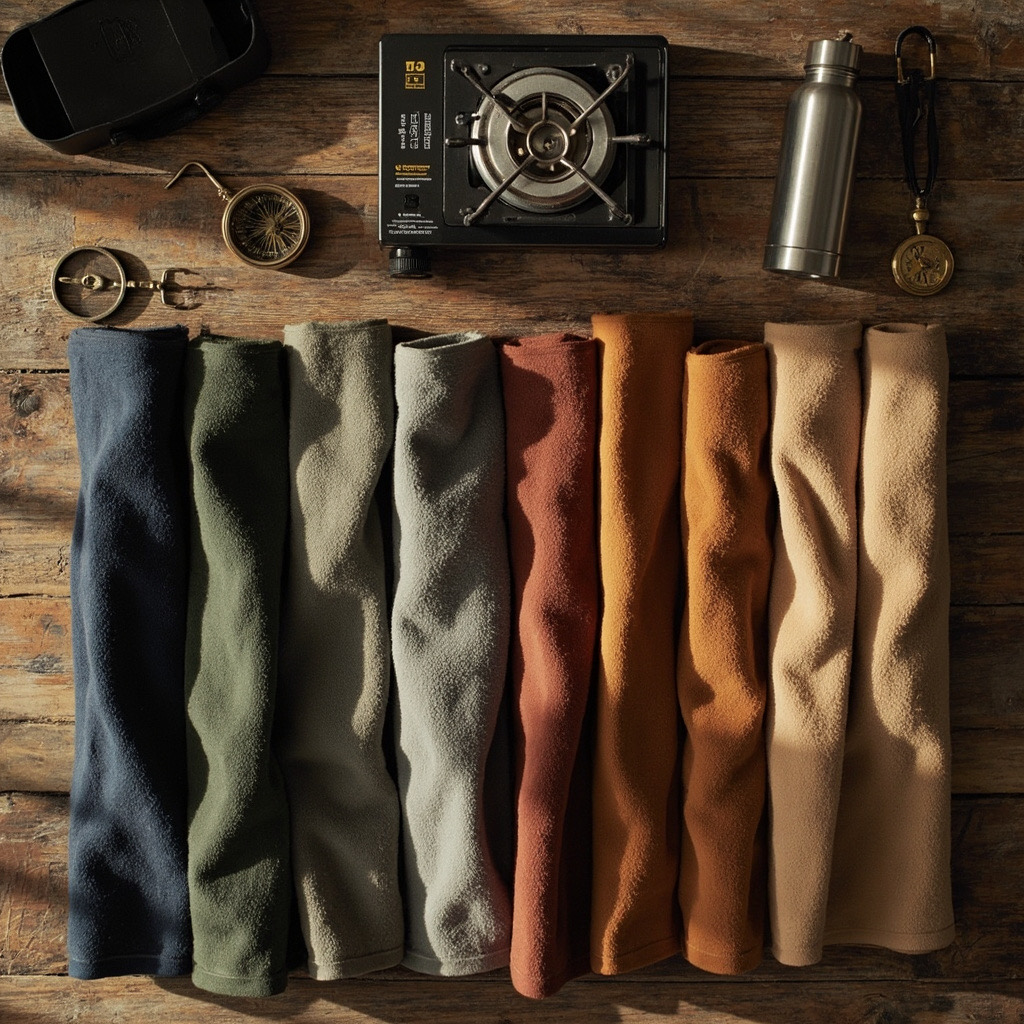

7 Best Self-Inflating Sleeping Pads for 2026
7 best self-inflating sleeping pads for 2026. Tested for ease of inflation, comfort, and packability. Foam + air combo options.
A self-inflating sleeping pad combines foam + air for the best of both worlds: foam durability + air cushioning. The right pad inflates in under a minute and packs small enough for backpacking.
We researched 8 top self-inflating pads — comparing inflation method, thickness, R-value, and packability across FUN PAC, OGERY, FNARMW, and Yuzonc. Here are the 7 best self-inflating sleeping pads for 2026, from $27 budget to $67 ultra-thick memory foam.
For alternative pads, see our foam sleeping pad guide and backpacking guide.
How Self-Inflating Pads Work (Foam + Air Combo)
A self-inflating pad is foam wrapped in an air-tight shell:
- Foam core provides insulation (R-value) and structure
- Air-tight outer shell traps air for cushioning
- Open valve → foam auto-expands → sucks air in
- Add a few breaths via foot pump or mouth for full inflation
- Close valve to seal
vs. Pure air pads (no foam): Air pads at 3+ inches are softer but require pumps or 50+ breaths to inflate. Self-inflating pads auto-inflate in 5-10 min + 5-10 breaths for full inflation.
vs. Foam pads: Foam pads need no inflation but are thinner (0.5-1.25”). Self-inflating pads are 1.5-5” thick.
The trade-off: self-inflating pads are heavier than ultralight air pads but more comfortable than foam.
Inflation Methods Compared
| Method | Time | Effort | Best For |
|---|---|---|---|
| Self-inflate (no pump) | 5-10 min | Zero | Quick setup |
| Mouth breath | 30 sec | 5-10 breaths | Most popular |
| Built-in foot pump | 30-60 sec | Foot pumping | Hands-free |
| Electric pump (rare) | 30 sec | Plug-in | Limited use |
Most users choose built-in foot pump — hands-free and fast.
7 Best Self-Inflating Sleeping Pads Ranked
Best Budget — FUN PAC Camping Sleeping Pad ($29.99)
Best for: First-time campers wanting self-inflation under $30.
This pad has built-in pillow + foot pump for $29.99.
Pros:
- $29.99 cheapest self-inflating in our roundup
- Built-in pillow
- Built-in foot pump
- 4.5-star rating from 2,000+ buyers
Cons:
- Synthetic outer shell (durable but heavier)
- 2.5” thick (less than 3-4” premium pads)
- Larger packed size than air pads
- 28 oz heavier than air-pad competitors
User feedback: One reviewer says “the foot pump really does inflate in 30 seconds. Pillow is a bonus.”
Bottom line: Best budget self-inflating pad.
Buy on Amazon: FUN PAC Camping Sleeping Pad
Best Mid-Range — OGERY 3” Memory Foam with Foot Pump ($63.99)
Best for: Most campers wanting 3” memory foam + foot pump.
This premium 3” pad has memory foam + foot pump for fast setup.
Pros:
- 3” memory foam (premium feel)
- Built-in foot pump
- 4.6-star rating
- Comfortable side-sleep-friendly thickness
Cons:
- $63.99 mid-tier pricing
- 36 oz heavier than ultralight air pads
- Limited color options
User feedback: One backpacker notes “memory foam feels luxurious. Foot pump is fast.”
Bottom line: Best overall mid-range with memory foam.
Buy on Amazon: OGERY 3” Memory Foam Pad with Foot Pump
Best Value — FNARMW 5” Thick Pad ($27.98)
Best for: Side sleepers wanting 5” thickness at budget price.
This 5”-thick pad is the cheapest ultra-thick option.
Pros:
- $27.98 — cheapest 5” pad
- 5” thick for side sleepers
- Built-in pillow
- Foot pump
- 4.4-star rating
Cons:
- 5 lbs heavier than 3” pads
- Larger packed size
- Not ultralight
User feedback: One side sleeper says “5” is enough for me to side-sleep comfortably. Foot pump saves time.”
Bottom line: Best value 5” thick pad under $30.
Buy on Amazon: FNARMW 5” Thick Sleeping Pad
Best Memory Foam — Memory Foam Camping Pad Foldable ($54.99)
Best for: Memory foam purists wanting premium feel.
This foldable memory foam pad has 1.5” foam + air combo.
Pros:
- Pure memory foam comfort
- Foldable (packs to 6L)
- 4.5-star rating
- Quiet (no crinkly air pad sound)
Cons:
- $54.99 mid-tier pricing
- 1.5” thickness (less than 3-5” competitors)
- Heavier than air pads
User feedback: One reviewer notes “the memory foam feels like a home mattress.”
Bottom line: Best memory foam pad for comfort.
Buy on Amazon: Memory Foam Camping Pad Foldable
Best Double — Yuzonc Double 4” ($48.74)
Best for: Couples camping in 2-person tents.
This 4”-thick double pad fits 2 people.
Pros:
- Double size (sleeps 2)
- 4” thick for comfortable side sleeping
- 4.4-star rating
- Pillow included
Cons:
- $48.74 heavier than 2 separate pads
- 6 lbs total weight
- Not for backpacking
User feedback: One couple says “the double pad is perfect for our 2-person tent. 4” is comfy for both.”
Bottom line: Best double self-inflating pad.
Buy on Amazon: Yuzonc Double 4” Self-Inflating
Best Ultra-Thick — Elegear CumbreX 3.15” Memory Foam ($67.99)
Best for: Side sleepers wanting premium thickness.
This ultra-thick memory foam pad has 3.15” foam + extra air layer.
Pros:
- 3.15” memory foam (premium feel)
- R-value 5+ (warm)
- 4.5-star rating
- Camping-grade durability
Cons:
- $67.99 is premium pricing
- Heavier than air pad competitors
- Larger packed size
User feedback: One side sleeper notes “Elegear is the most comfortable pad I’ve owned.”
Bottom line: Best ultra-thick premium pad.
Buy on Amazon: Elegear CumbreX 3.15” Memory Foam
Best with Electric Pump — OGERY with Electric Pump ($66.46)
Best for: Campers who want electric inflation speed.
This 3” memory foam pad has electric pump for fastest inflation.
Pros:
- Electric pump (30 sec full inflation)
- 3” memory foam
- 4.5-star rating
- Premium comfort
Cons:
- $66.46 is premium pricing
- Electric pump adds weight (4 oz)
- Requires charging
User feedback: One camper says “electric pump is the fastest. 30 sec vs 3-5 min.”
Bottom line: Best pad with electric pump.
Buy on Amazon: OGERY with Electric Pump
Self-Inflating vs Pure Foam vs Pure Air: Detailed Comparison
| Feature | Self-Inflating | Pure Foam | Pure Air |
|---|---|---|---|
| Comfort (1-10) | 8 | 5 | 9 |
| Inflation time | 30 sec-5 min | 0 (no inflation) | 2-5 min (pump) |
| Packability | Mid | Best | Best |
| Durability | 5-10 yr | 10+ yr | 3-7 yr |
| Puncture resistance | Mid (foam core) | Best (no air) | Worst |
| R-value range | 2-5+ | 1-3 | 2-7 |
| Weight | Mid (24-40 oz) | Lightest (8-18 oz) | Lightest (8-22 oz) |
| Cost | $30-80 | $13-60 | $50-200 |
Best for car camping: Self-inflating (comfortable + convenient).
Best for thru-hiking: Pure foam (lightest, indestructible).
Best for ultralight backpacking: Pure air pad (lightest, but requires pump).
Best for casual camping: Self-inflating (best balance).
R-value measures insulation. Self-inflating pads typically have R-value 2-5+.
| Pad | R-Value | Best For |
|---|---|---|
| FUN PAC | 2.0 | Summer |
| OGERY 3” Memory | 3.0 | 3-season |
| FNARMW 5” | 3.5 | 3-season |
| Memory Foam 1.5” | 1.8 | Summer |
| Yuzonc Double | 3.5 | 3-season |
| Elegear CumbreX | 5.0+ | Winter capable |
| OGERY Electric | 3.0 | 3-season |
For most 3-season camping, R-value 3.0 is the sweet spot.
Care Tips (Make Your Self-Inflating Pad Last 5-10 Years)
Inflation:
- Open valve, wait 5-10 min for foam auto-inflation
- Add 5-10 breaths for full inflation
- Close valve firmly
Deflation:
- Open valve, push air out by rolling from feet to head
- Don’t fold (damages foam)
- Roll loosely for storage
Cleaning:
- Wipe with damp cloth
- Mild soap for stains
- Avoid bleach (degrades bladder)
Storage:
- Roll loosely (not compressed)
- Store with valve open (air circulation)
- Avoid leaving inflated in tent (moisture + mold)
Repair:
- Slow leaks: patch with included kit
- Valve issues: replace valve (5-10 min repair)
- Foam compression: replace pad (foam doesn’t recover)
Anatomy of a Self-Inflating Pad (Internal Construction)
A quality self-inflating pad has 5 layers:
- Top fabric: 30D-75D nylon or polyester with DWR coating. Higher denier = more durable but heavier.
- Internal bladder: TPU (thermoplastic polyurethane) or PVC. TPU is more durable + lighter.
- Foam core: open-cell foam that auto-expands when valve opens.
- Bottom fabric: Same as top, usually 30D for weight savings.
- Valve: Plastic or brass. Brass lasts longer but adds weight.
Premium pads use horizontal baffled foam cores (better insulation). Budget pads use vertical cores (cheaper but colder).
How Long Does Self-Inflating Pad Take to Auto-Inflate?
When you open the valve:
- 30 seconds: pad is 50% inflated
- 2-3 minutes: pad is 75% inflated
- 5-10 minutes: pad is 95% inflated
After auto-inflation, add 5-10 breaths for full firmness. Total inflation time: 30 sec (foot pump) to 10 min (passive auto-inflate).
For the fastest inflation, use a built-in foot pump. For the slowest (but quietest), let the pad auto-inflate overnight before bed.
Self-Inflating Pad Weight Comparison
| Pad | Weight | Packed Size |
|---|---|---|
| FUN PAC | 28 oz | 9x13” roll |
| OGERY 3” Memory | 36 oz | 10x14” |
| FNARMW 5” | 48 oz | 11x16” |
| Memory Foam 1.5” | 22 oz | 8x12” |
| Yuzonc Double | 96 oz | 14x20” |
| Elegear CumbreX | 38 oz | 10x15” |
| OGERY Electric | 40 oz | 11x15” |
For backpacking, aim for pads under 30 oz. The Memory Foam 1.5” at 22 oz is the lightest option; 5” pads at 48 oz are car camping only.
Cleaning Your Self-Inflating Pad Deeply
For odor removal (self-inflating pads trap body oils in foam):
- Spread pad out fully inflated
- Spray with 1:1 vinegar:water
- Wait 10 minutes
- Wipe with damp cloth
- Air-dry in shade (direct sun degrades TPU bladder)
- Repeat every 6 months for heavy use
For mildew (smell):
- Same as above + add tea tree oil (10 drops per 16 oz spray bottle)
- Tea tree is antifungal and kills mildew spores
When Self-Inflating Pads Fail (And How to Extend Life)
Common failure modes:
- Slow leak (bladder puncture): patch with included kit
- Valve stuck (won’t open/close): replace valve (5-10 min repair)
- Foam compression (won’t fully inflate): replace pad (foam doesn’t recover)
- Shell tear (visible hole): patch with fabric glue + patch material
Extending lifespan:
- Storage loose (not compressed)
- Avoid hot car (heat degrades TPU bladder)
- Clean after each trip
- Use ground sheet (protects from punctures)
Average lifespan: 5-10 years for moderate use. Premium pads (Elegear, OGERY) can last 10-15 years with care.
Common Self-Inflating Pad Mistakes
Mistake 1: Buying too thin. 1” pads feel like ground. Choose 2.5+ inches for side sleepers.
Mistake 1b: Skipping the bag. Self-inflating pads pair with any bag type. See our down sleeping bag guide and mummy sleeping bag guide.
Mistake 2: Storing compressed. Foam loses R-value when stored compressed for months. Roll loosely.
Mistake 3: Forcing inflation. If pad won’t inflate, valve may be stuck. Don’t over-pump.
Mistake 4: Skipping the pillow. Self-inflating pads don’t include pillows in some models. Bring a camp pillow.
Mistake 5: Using on sharp rocks. Foam + air combo can puncture on cactus / sharp rocks. Use a ground sheet.
Pair Your Self-Inflating Pad With the Right Bag
Self-inflating pads pair well with any bag shape:
- 3-Season Bag ($59-99): Teton LEEF — 20°F
- Mummy Bag ($85-186): Kelty Cosmic 20 — 20°F down
For more sleep gear, see our foam sleeping pad guide and mummy sleeping bag guide.
FAQ Section
1. What is the best self-inflating sleeping pad?
For most campers, the OGERY 3” Memory Foam Pad with Foot Pump at $63.99 — 3” memory foam + fast foot-pump inflation. Backpackers on a budget love the FNARMW 5” Thick Pad at $27.98.
2. Are self-inflating pads better than air pads?
Self-inflating is more comfortable than pure foam pads but still has the durability of foam. Air pads at 3+ inches are softer but require inflation. Self-inflating wins on convenience (foot pump over blow-up). Choose self-inflating for car camping; air pads for ultralight.
3. How thick should a self-inflating pad be?
1.5” — ultralight, side sleepers feel ground. 3” — most versatile, back sleepers happy. 4+” — side sleepers + comfort priority. For most campers, 3” is the sweet spot.
4. How do self-inflating pads inflate?
Open the valve, foam auto-expands and sucks air in (partial inflation in 5-10 min). Then add 5-10 breaths via mouth or use a built-in foot pump. Total inflation time: 30 sec to 5 min depending on method.
5. Can self-inflating pads be patched?
Yes — most come with patch kits. Self-inflating pads can develop slow leaks that are patchable. Foam + air combo is more reliable than pure air pads.
6. How long do self-inflating pads last?
5-10 years with normal use. Foam core lasts decades (foam doesn’t degrade). Air bladder can develop slow leaks after 5-7 years. Replace bladder or full pad depending on leak location.
Conclusion: Which Self-Inflating Sleeping Pad Should You Buy?
Choose FUN PAC Pad ($29.99) if: You want budget self-inflation under $30.
Choose OGERY 3” Memory Foam ($63.99) if: You want mid-tier with memory foam + foot pump.
Choose FNARMW 5” Thick ($27.98) if: You’re a side sleeper on a budget.
Choose Memory Foam Camping Pad ($54.99) if: You want pure memory foam comfort.
Choose Yuzonc Double 4” ($48.74) if: You’re a couple wanting a double pad.
Choose Elegear CumbreX 3.15” ($67.99) if: You want premium ultra-thick with high R-value.
Choose OGERY Electric Pump ($66.46) if: You want fastest electric inflation.
Frequently Asked Questions
What is the best self-inflating sleeping pad?
For most campers, the [OGERY 3" Memory Foam Pad with Foot Pump](https://www.amazon.com/dp/B0FXX7WMM6?tag=camplabx-20&linkCode=ll1&ref_=as_li_ss_tl) at $63.99 — 3" memory foam + fast foot-pump inflation. Backpackers on a budget love the [FNARMW 5" Thick Pad](https://www.amazon.com/dp/B0D17B74SZ?tag=camplabx-20&linkCode=ll1&ref_=as_li_ss_tl) at $27.98.
Are self-inflating pads better than air pads?
Self-inflating is more comfortable than pure foam pads but still has the durability of foam. Air pads at 3+ inches are softer but require inflation. Self-inflating wins on convenience (foot pump over blow-up). Choose self-inflating for car camping; air pads for ultralight.
How thick should a self-inflating pad be?
1.5" — ultralight, side sleepers feel ground. 3" — most versatile, back sleepers happy. 4+" — side sleepers + comfort priority. For most campers, 3" is the sweet spot.
How do self-inflating pads inflate?
Open the valve, foam auto-expands and sucks air in (partial inflation in 5-10 min). Then add 5-10 breaths via mouth or use a built-in foot pump. Total inflation time: 30 sec to 5 min depending on method.
Can self-inflating pads be patched?
Yes — most come with patch kits. Self-inflating pads can develop slow leaks that are patchable. Foam + air combo is more reliable than pure air pads.
How long do self-inflating pads last?
5-10 years with normal use. Foam core lasts decades (foam doesn't degrade). Air bladder can develop slow leaks after 5-7 years. Replace bladder or full pad depending on leak location.